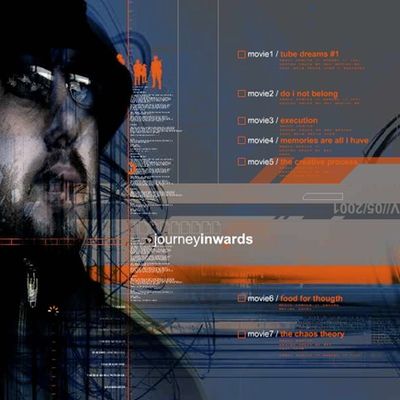
Ross Mawdsley
United Kingdom Manchester
United Kingdom, Manchester
Ross Mawdsley is a British designer and digital artist from Liverpool, England, and the creator of Simian.nu, an experimental web project developed at the beginning of the 2000s.
Working within the emerging creative possibilities of the early web, Mawdsley explored interactive design as a space for personal experimentation beyond the constraints of commercial production. His work belongs to a period in which artists and designers were beginning to use the browser not simply as a means of presenting information, but as a medium in itself, combining graphic design, animation, sound, interaction, and non-linear forms of digital storytelling.
Alongside his personal experimental practice, Mawdsley worked professionally in digital design and founded his own design company, IKDA. With Simian, however, he created a space deliberately free from client requirements and conventional communication structures, allowing experimentation with interaction, narrative, visual language, and the possibilities offered by Flash-based environments.
His approach reflects an important moment in the development of web-based creative practices, when navigating a digital work could itself become part of the artistic experience and the viewer was asked to discover its structures, meanings, and possible paths through direct interaction.
Working within the emerging creative possibilities of the early web, Mawdsley explored interactive design as a space for personal experimentation beyond the constraints of commercial production. His work belongs to a period in which artists and designers were beginning to use the browser not simply as a means of presenting information, but as a medium in itself, combining graphic design, animation, sound, interaction, and non-linear forms of digital storytelling.
Alongside his personal experimental practice, Mawdsley worked professionally in digital design and founded his own design company, IKDA. With Simian, however, he created a space deliberately free from client requirements and conventional communication structures, allowing experimentation with interaction, narrative, visual language, and the possibilities offered by Flash-based environments.
His approach reflects an important moment in the development of web-based creative practices, when navigating a digital work could itself become part of the artistic experience and the viewer was asked to discover its structures, meanings, and possible paths through direct interaction.
SOCIAL
Program
Tuesday, 23 September 2003